Find comic artists, writers and illustrators, see what they have worked on, and check which conventions they are appearing at next. FanConHub currently tracks 434 artists, 39 with an upcoming appearance.
Showing 1 to 24 of 43 artists.
Legends
13 on this pageCreators whose work defined the medium and still shapes how comics look today.
Ross paints superheroes as though they were standing in the room: real light, real weight, real fabric. Marvels and Kingdom Come reframed familiar characters as monuments seen from street level, and his covers are now the images many readers picture when they think of these characters at all.
Sienkiewicz treats a comics page as a surface to attack, with paint, collage, photography, scratched ink and outright abstraction. The New Mutants and Elektra: Assassin showed mainstream readers a superhero book could look like a gallery piece, and that permission runs through decades of cartooning since.
Bolland's line is close to mechanical in its precision, every contour deliberate and every surface finished. The Killing Joke and his Judge Dredd work made his name, and his covers remain a reference point for how clean a comics image can be.
Gibbons builds pages like clockwork. Watchmen's nine-panel grid, its repeating symbols and its buried visual rhymes are his architecture as much as anyone's, and the same control shows up in Give Me Liberty and his Green Lantern work.
Mazzucchelli's superhero output is small and enormously influential. Born Again and Batman: Year One taught a generation what restraint and empty space can carry, after which he left the genre for literary work including Asterios Polyp.
Miller writes and draws in hard shadow and clipped rhythm. His Daredevil brought crime-fiction structure into superhero comics, The Dark Knight Returns and Batman: Year One recast Batman for a generation, and Sin City stripped the whole approach down to black-and-white noir.
Few artists have shaped what a superhero looks like on the page as directly as Jim Lee. His early-nineties X-Men work, all dense crosshatching and coiled anatomy, became a house style that later artists still work against. He left to co-found Image Comics and WildStorm, then became one of DC's defining figures on Batman: Hush and Justice League.
Quesada works in strong silhouettes and heavy blacks, and his Daredevil: Guardian Devil helped launch Marvel Knights. He went on to run Marvel as editor-in-chief through the period that reshaped its modern line.
Romita builds figures from blocky, weighted shapes that land with real force. Across four decades he has drawn most of the Marvel line, from Amazing Spider-Man and Daredevil to Thor and Uncanny X-Men, plus Kick-Ass with Mark Millar and a run on Superman.
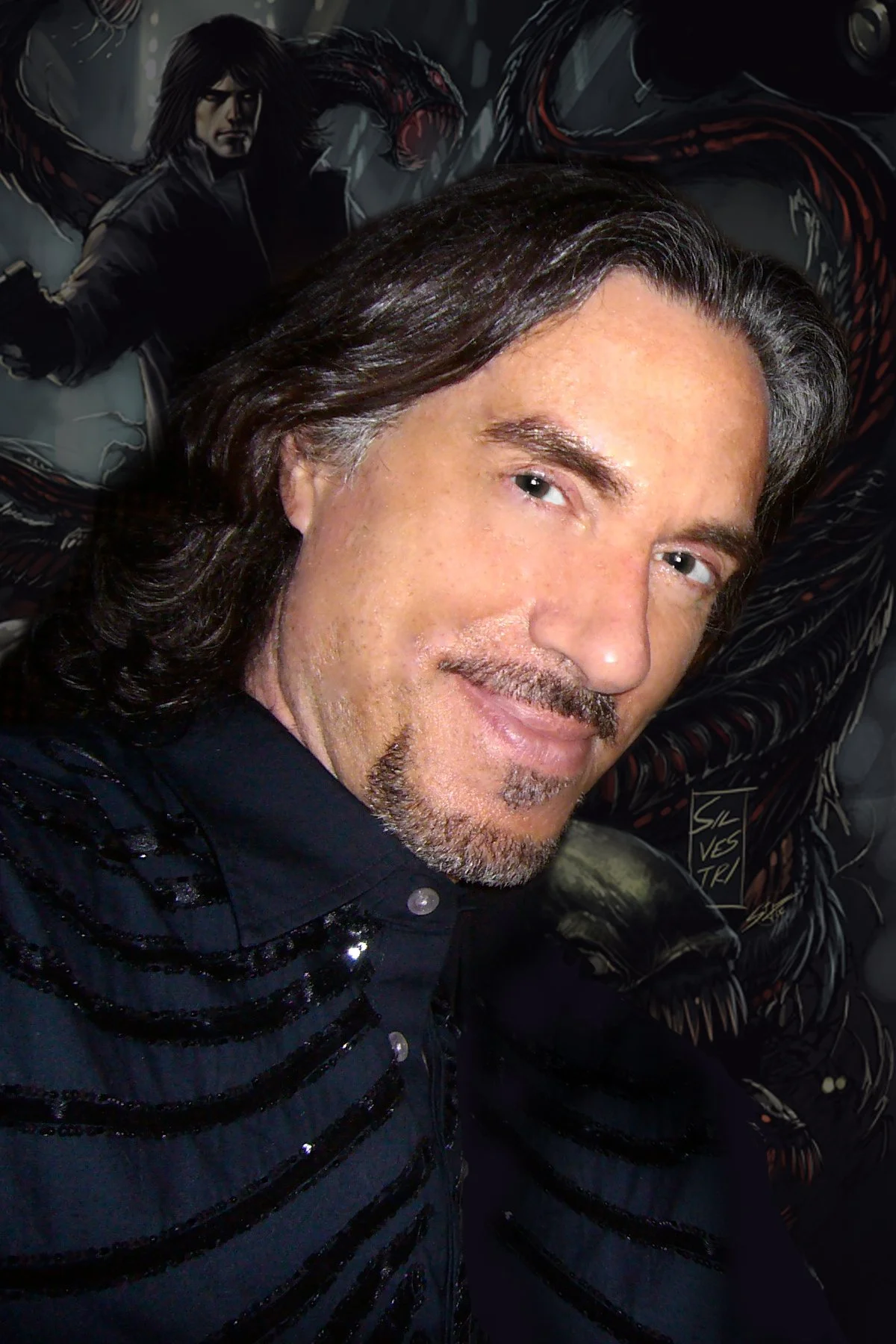
Silvestri draws in sharp angles, whipping hair and tense wiry anatomy, a look that defined a stretch of Uncanny X-Men and Wolverine. He co-founded Image Comics and built Top Cow, home to Witchblade, Cyberforce and The Darkness.
Mignola composes in flat black shapes, letting shadow do the work a dozen lines would elsewhere. That language, drawing on folklore and pulp, produced Hellboy and the whole B.P.R.D. universe built around it.
McFarlane drew Spider-Man with impossible contortions, spaghetti webbing and a restless line that kept every page in motion. He walked away at the height of that success to co-found Image Comics, where Spawn became one of the best-selling creator-owned books ever published.
Simonson breaks the page apart and rebuilds it: sound effects that double as design elements, panels tilting into each other, mythology drawn at full volume. His Thor is among the most imitated runs in superhero comics.
Major artists
11 on this pageWidely known professionals headlining major books, events and convention line-ups.
Adam Kubert draws with thick, expressive line weight and a real feel for impact. His Wolverine and Hulk pages are bruising, and he has moved between Marvel and DC's biggest books for thirty years.
Andy Kubert stages superhero stories like film, with wide establishing shots, clean sightlines and a steady build to the hit. He drew X-Men through the nineties, then Wolverine: Origin, Marvel 1602, Batman and Son and Flashpoint.
Hitch draws superheroes at movie scale, with wide panels, real architecture and crowds that feel populated. The Authority and The Ultimates made widescreen a working term among comics artists.
Johnson draws as though the page itself is under stress, with hand-lettered sound effects, torn panel borders and bodies thrown around at real cost. Murder Falcon and Do a Powerbomb! turn that energy into something surprisingly moving.
Robertson draws cities that feel filthy and lived-in, and faces that look like people you would actually meet. Transmetropolitan and The Boys both depend on that grounding to make their satire land.
Finch renders in dense hatching and deep shadow, giving his heroes bulk and menace. He drew New Avengers and Moon Knight at Marvel before moving to DC for Batman: The Dark Knight and Wonder Woman.
Risso works in extreme light and shadow, cutting figures down to silhouette and letting black carry the story. 100 Bullets is a long clinic in noir page construction.
Quitely draws people who look like they have weight and skin, slightly soft, slightly awkward and entirely alive. All-Star Superman and WE3 are masterclasses in panel design, and his character acting is as subtle as anything in the medium.
Frank's characters act with their faces, small shifts of expression that carry a scene on their own. It grounds even the largest stories, from Superman: Secret Origin and Batman: Earth One to Doomsday Clock.
Capullo builds bodies like a sculptor and faces that carry real dread. A long run on Spawn led into his Batman work with Scott Snyder, from Court of Owls through Dark Nights: Metal, which set how Gotham looked for a decade.
Ramos stretches anatomy the way animation does: long limbs, enormous expressions, motion pushed past what a body could actually do. It suits Spider-Man exactly, which is where he has spent much of the last two decades.
Never miss an artist near you
Get a heads-up when conventions are announced in your state.
Weekly alerts for cons happening near you. Unsubscribe anytime. See this week's email.

.jpg?width=600)